
Shutter Delivery from China - 14 weeks by Sea vs 8 weeks by Rail
- Jun 5
- 3 min read
When ordering custom-made plantation shutters, over 90% are manufactured in China and then transported to the UK.
Two main logistics routes dominate this supply chain: sea freight and rail freight. Both have advantages and drawbacks, and understanding them helps explain why lead times, pricing, and reliability can vary so much.
1. Sea Freight: The Traditional, Cost-Efficient Option

Sea freight is still the most widely used method for transporting shutters from China to the UK. Containers are loaded at major Chinese ports such as Shanghai or Shenzhen and shipped to UK hubs like Southampton via the Suez Canal.
Key Benefits for Consumers
Lower overall cost Sea freight is significantly cheaper per unit than rail. This cost saving is passed down the supply chain, making shutters delivered by sea, more competitively priced.
Better for bulk orders Because containers can be fully packed with large volumes of shutters, manufacturers and distributors achieve economies of scale.
Widespread availability Most shutter suppliers are built around sea freight logistics, as the primary option as it’s the most common and proven route.
Drawbacks
Longer lead times Typically, sea freight takes around 12-14 weeks door-to-door depending on routing, port congestion, and customs clearance.
More risk of delays Weather disruptions, port congestion (especially around peak seasons), and global shipping issues can add unpredictable delays.
2. Rail Freight: The Faster, More Costly Alternative
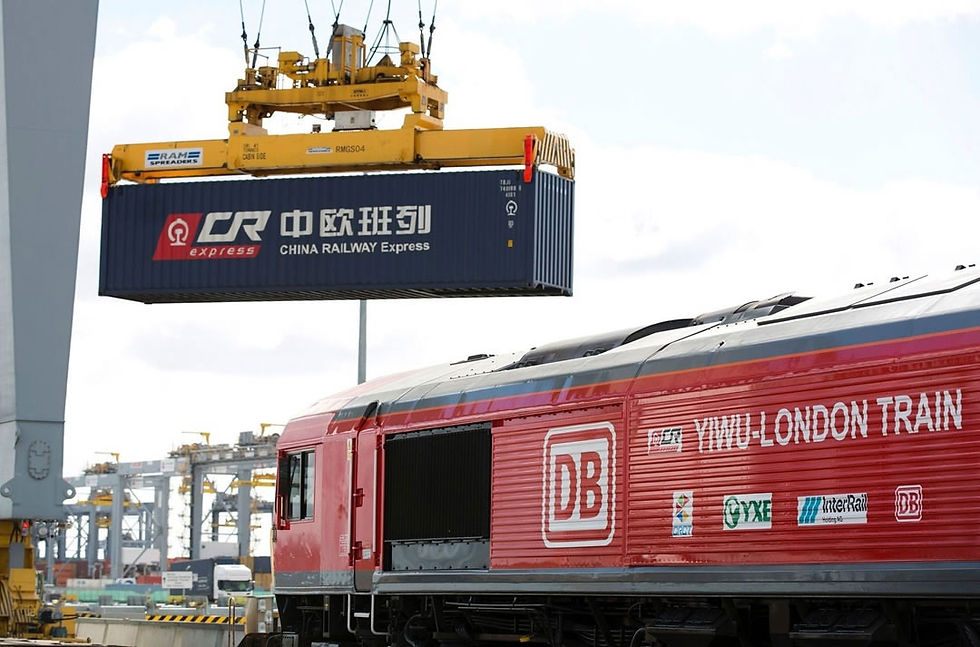
Rail freight from China to Europe has grown rapidly in recent years, using routes that pass through Central Asia into Europe before reaching the UK by onward road transport.
Key Benefits for Consumers
Faster delivery times Rail typically takes around 8 weeks, making it roughly twice as fast as sea freight.
More reliable schedules Trains tend to run on more fixed timetables than ocean freight, which is more vulnerable to weather and port congestion.
Lower carbon footprint than sea or air (in many cases)Rail is often promoted as a more environmentally balanced option compared with air freight and, in some cases, even sea freight depending on routing efficiency.
Drawbacks
Higher cost Rail freight is more expensive than sea freight, which increases the retail price of shutters.
Limited capacity Train routes have less cargo capacity than container ships, meaning availability can be more restricted during peak demand.
Route dependency Rail shipments still rely on multiple countries and borders, which can occasionally introduce delays due to customs or geopolitical factors.
3. What This Means for UK Shutter Buyers
From a consumer perspective, the choice of freight method often shows up in three key areas:
Price vs Speed Trade-Off
Sea freight = better value, slower delivery
Rail freight = faster delivery, higher price
If you're not in a rush, sea freight delivers the best value. If you're working to a tight renovation time schedule, rail freight can justify its premium.
Lead Time Expectations
All UK shutter suppliers use the same delivery systems for Chinese made shutters and share very similar lead times.
Sea freight: typically 12-14 weeks
Rail freight: typically 8 weeks
Understanding this helps set realistic expectations and avoid frustration.
Consistency and Reliability
Rail freight tends to offer slightly more predictable arrival windows, sea freight, while reliable overall, is more exposed to global shipping volatility.
4. The Bigger Picture: Quality Isn’t Defined by Transport Method
It’s important to note that the freight method does not determine shutter quality. Both rail and sea shipments come from the same factories using the same materials, coatings, and manufacturing standards.
What changes is:
how quickly they arrive
how much they cost to ship
how predictable the timeline is
5. Final Thoughts
For UK consumers buying plantation shutters, understanding the difference between rail and sea freight helps explain why suppliers vary so much in price and lead time.
If your priority is value, sea freight remains the backbone of the industry.
If your priority is speed, rail freight offers a compelling alternative.
We use a combination of both routes with a 10% premium for faster rail freight.


Comments